
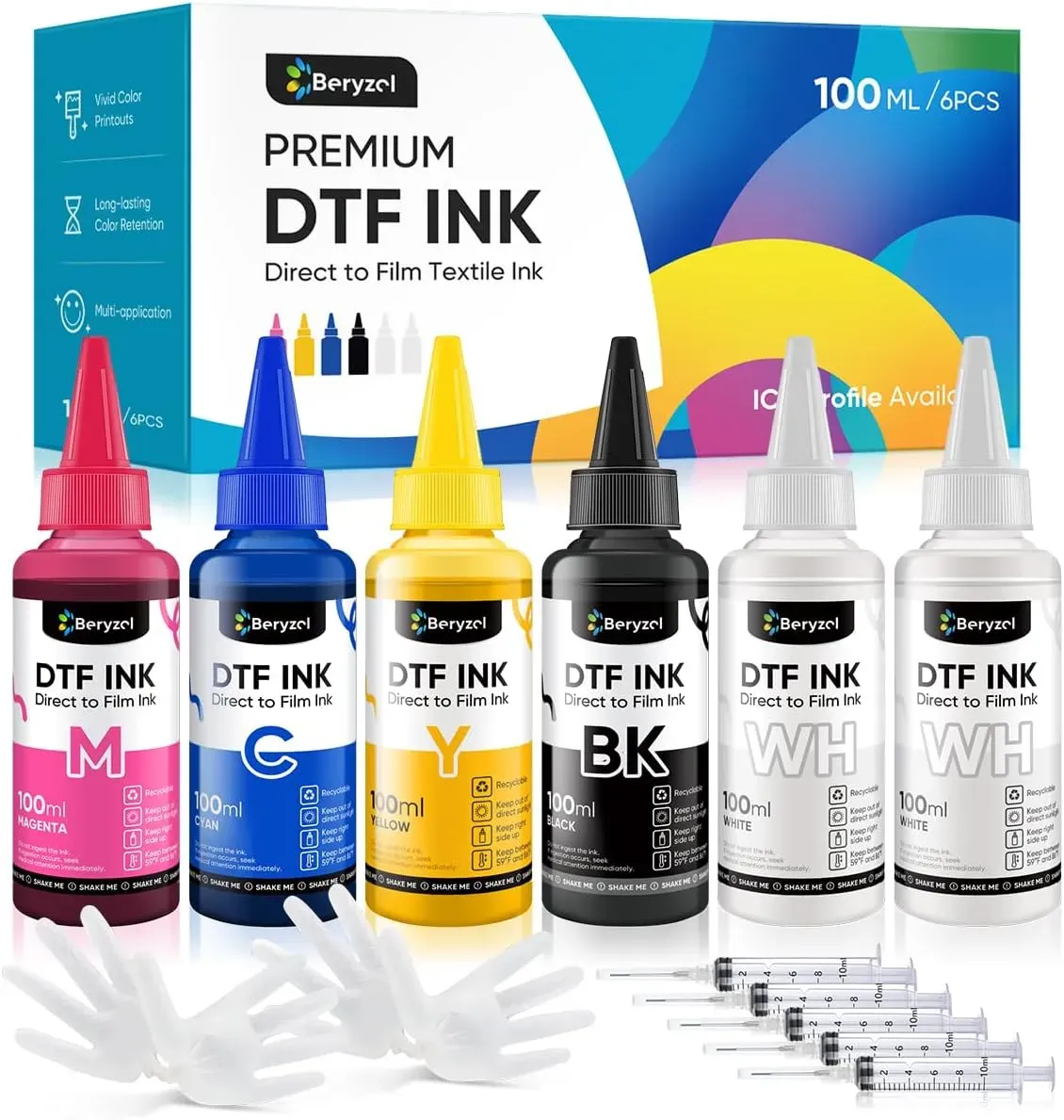
DTF Ink has emerged as a key driver of quality in modern Direct-to-Film transfers, delivering vibrant color and reliable adhesion right from the printer. When you compare DTF ink vs powder, the balance of these core supplies often determines color accuracy, edge definition, and wash durability. DTF printing supplies should be evaluated as an integrated system, where DTF ink quality, powder behavior, and film compatibility all influence the final look. A strong outcome hinges on how the ink interacts with the film, how the powder melts, and how those factors translate into durable Direct-to-Film transfers. Investing in well-matched DTF film and powder compatibility, along with proper printer maintenance and heat-press settings, helps ensure repeatable, professional results.
From a Latent Semantic Indexing (LSI) perspective, the topic shifts to the chemistry behind the liquid colorants and the adhesive particles that bond the design to fabric. Think of it as an ecosystem where ink formulations, the resin in the powder, the release film, and the heat process come together to determine color fidelity and durability. Using alternative terms—such as liquid pigments, binder-filled powder, transfer film interface, and thermal bonding parameters—helps illustrate the same idea without overreliance on a single vocabulary.
[DTF Ink] The Core of DTF Printing Quality
In Direct-to-Film printing, ink quality often drives the first impression. The discussion around DTF ink vs powder centers on whether the colorants and resin in the ink can deliver vibrant tones, clean whites on dark fabrics, and stable performance through washes. Achieving consistent results isn’t about one component alone; it’s about a balanced system where DTF printing supplies—ink, powder, film, and the heat-press protocol—work in harmony.
This means investing in a DTF Ink setup that matches your printer’s color management and workflow. When the ink and its chemistry align with the film’s surface characteristics and the powder’s melting behavior, you’ll see crisper details, smoother gradients, and better skin tones in Direct-to-Film transfers. The best outcomes come from treating ink quality as a central pillar rather than an afterthought in a broader supply chain.
DTF Ink Quality: Color, Clarity, and Durability
DTF ink quality directly influences the final image’s color gamut, gradient smoothness, and wash durability. High-quality ink typically delivers broader color reproduction and stronger color saturation, reducing banding and dull hues after transfer. The ink’s pigment load and resin system interact with the chosen film and powder to determine how faithfully subtle tones render on fabric.
Beyond color, the drying time and adhesion characteristics of the ink influence how reliably the design transfers from film to garment. If the ink dries too slowly, it can smear or smudge during powder application; too fast, and it may not bind evenly with the film. In both cases, Direct-to-Film transfers suffer, making ink quality a critical lever for predictable results.
DTF Printing Supplies: The System Beyond Ink and Powder
DTF printing supplies encompass more than ink and powder; they include film quality, printer maintenance, and the heat-press setup. A holistic view acknowledges that the film’s surface energy, thickness, and coating shape how ink sits on the substrate and how the powder will adhere. Treating this as a system helps avoid mismatches that produce ghosting, edge halos, or uneven transfer across runs.
The interplay among the film, powder, and ink is what ultimately shapes results. When you consider the full spectrum of DTF printing supplies, you’re evaluating DTF film and powder compatibility, the printer’s maintenance schedule, and even the calibration of your heat-press. This broader perspective prevents chasing a single upgrade and instead fosters stable, repeatable outcomes across batches.
Direct-to-Film Transfers: From Film Surface to Durable Finish
Direct-to-Film transfers rely on the film’s surface properties to lock in ink while accepting powder for final adhesion. The film’s coating and energy impact how crisply lines hold and how edge details translate during heat transfer. A film with suitable surface energy supports clean edges and reduces ghosting, enabling the ink and powder to perform consistently.
As the transfer progresses, the relationship between heat, time, and pressure becomes pivotal. Inadequate heat can leave uncured powder or insufficient bond, while excessive heat can distort details or cause color bleed. Understanding this dynamic is essential for optimizing Direct-to-Film transfers and ensuring that the final garment meets expectations for durability and appearance.
DTF Film and Powder Compatibility: Matching Elements for Consistency
DTF film and powder compatibility sits at the heart of reliable results. The right combination ensures even powder flow, consistent adhesion, and clear edge definition without halos. When the ink is paired with a compatible film and the powder disperses uniformly, you’ll notice less spotty adhesion and more predictable wash performance.
Testing different film surfaces against your chosen ink and powder helps identify the best match for your typical fabrics and designs. This is where practical adjustments—such as powder particle size, tack, and the film’s surface energy—play a decisive role in overall transfer quality and consistency across print runs.
Testing, Calibration, and Practical Checklists for Reliable DTF Results
Reliable results come from disciplined testing and careful calibration. Start with a baseline run using your current ink, powder, film, and heat-press settings to establish reference points for color, edge quality, and durability. Then swap one variable at a time—such as ink or powder—while keeping the others constant to observe how each component shifts the output.
A practical checklist helps you reproduce success: define your primary fabric mix, confirm color accuracy needs, validate wash durability, test powder coverage, assess film compatibility, align printer maintenance, and document temperature, dwell time, and pressure. This end-to-end approach supports consistent results and reduces costly trial-and-error in future production runs.
Frequently Asked Questions
How does DTF Ink quality impact Direct-to-Film transfers compared to DTF powder?
DTF Ink quality drives color vibrancy, gradient smoothness, and white ink performance on dark fabrics, directly shaping the final image. DTF Powder influences adhesion and edge definition; together they determine durability and edge cleanliness. In practice, ink quality often dominates the image appearance, while powder quality ensures reliable transfers and long-lasting results.
Are DTF printing supplies beyond ink and powder important for achieving high-quality results?
Yes. DTF film compatibility, the adhesive system, printer maintenance, and heat-press performance all affect consistency, edge-to-edge transfers, and wash durability. Treating the process as an integrated system helps you achieve repeatable, professional results.
What should I look for when evaluating DTF ink quality for different fabrics?
Focus on pigment load, resin chemistry compatible with the film, color management accuracy, white-ink performance on dark fabrics, and drying/washing durability. Higher pigment quality and proper resin formulation typically yield richer colors and better transfer stability across fabric types.
How does DTF film and powder compatibility influence transfer outcomes?
Film surface energy and coating affect ink acceptance and powder adhesion. Powder particle size, flow, and application method influence edge sharpness and bonding. Mismatched film and powder can cause halos, edge bleeding, or poor durability, so pairing ink, film, and powder matters.
How can I test to determine which supplies matter most for my workflow?
Run controlled baseline tests, then swap one variable at a time: change ink while keeping powder constant to assess color and gradients; change powder while maintaining ink to evaluate edge quality and adhesion; test different films and adjust heat-press settings. Document results to learn what mix delivers your desired balance.
What is the recommended approach to balancing DTF Ink and DTF Powder with other supplies for durable transfers?
Adopt an integrated system: start with high-quality DTF Ink aligned to your printer’s color management, confirm powder performance and flow, ensure film compatibility, and fine-tune heat-press parameters. Ongoing printer maintenance and batch testing help maintain consistent, durable Direct-to-Film transfers.
| Aspect | Summary | Impact on Quality |
|---|---|---|
| DTF Ink | Liquid colorants used in DTF; formulated for transfer films; affects color vibrancy, resolution, white ink performance on colored fabrics, washfastness, and ease of transfer. | Drives color reproduction, gradients, and overall print stability |
| DTF Powder | Fine adhesive powder applied to the printed film; affects adhesion, edge quality, transfer durability; inappropriate powder causes halos, texture, or poor adhesion/flaking. | Critical for edge definition, detail preservation, and long-lasting transfers |
| System Balance | Ink, powder, film, and heat-press settings must work together to form a coherent workflow. | Wrong combinations yield color shifts, incomplete transfers, or cracking/peeling after washing |
| Ink vs Powder Roles | Ink determines color reproduction; powder controls adhesion and edge quality. | Both are essential; an imbalance limits quality. |
| Other Supplies | Film quality, adhesive layers, printer maintenance, and heat-press characteristics influence transfer consistency. | Affects overall quality and batch-to-batch reliability |
| Practical Testing | Baseline tests; swap ink, swap powder, test film compatibility, and calibrate heat-press settings; document results. | Helps identify which supplies matter most for your workflow |
| Choosing Right Supplies | Aim for an integrated system aligned with fabric types, colors, and wash durability. | Optimizes performance for specific use cases |
| Pitfalls & Best Practices | Avoid mixing brands without testing; maintain consistent powder application; calibrate heat-press for the ink/powder combo. | Reduces unpredictable results and print defects |
| Real-World Lessons | Ink upgrades improve color depth; powder improvements help edge quality; holistic optimization yields best outcomes. | Shows the advantage of end-to-end optimization |
Summary
DTF Ink sits at the heart of Direct-to-Film quality, and a balanced system—combining ink, powder, film, and heat-press settings—delivers reliable, high-quality transfers. The strongest outcomes arise when you optimize ink quality first, pair it with a compatible powder, and then validate film compatibility and press parameters. Regular testing, standardized baselines, and careful calibration across the workflow help ensure color accuracy, edge definition, wash durability, and batch-to-batch consistency. In short, the path to quality is holistic: invest in quality DTF Ink, choose a powder with reliable flow, select a suitable film, and tune your heat-press settings for your specific workflow, then maintain the system with routine printer care and process documentation.